






















I Am a Mammal Who Pays to Have Her Face Waxed. We Need to Talk.
A brow appointment, two rogue chin hairs and the razor company that decided your armpits were a problem.

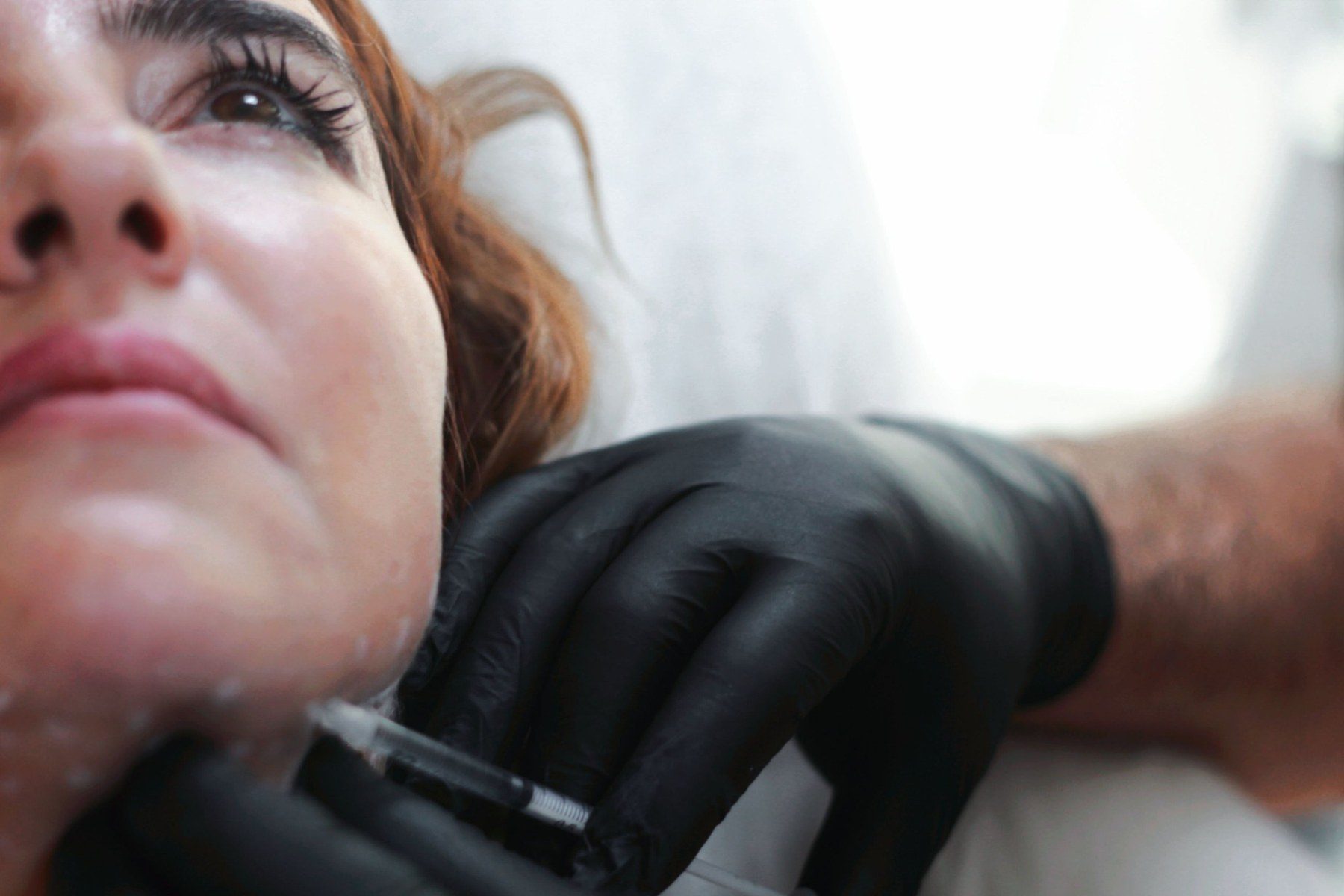
I am lying on a table in a small, dimly lit room when a short, middle-aged woman rips the hair out of my eyebrows. The flash of pain is so pure it feels educational. She inspects her work, finds it lacking and goes back in. I am paying her for this. I will also tip.
My brows and I were happy once. At 26, I went to Beijing to visit a friend, and she studied my face the way a contractor studies a sagging porch. The salon on the first floor of her high-rise could take care of those, she said. Her treat.
Those. I had not known there was a those. Media and society had already briefed me on what to weigh, what to wear and how to look while doing both, but I had assumed my naturally thick eyebrows enjoyed diplomatic immunity. How wrong I was.
I went home self-conscious and signed up for a monthly tour of duty: wax, pluck, wince, repeat. Then menopause arrived with a welcome gift, stubborn new hairs on my upper lip and two strays on my chin. Dermatologists blame a shift in the balance of hormones and call it perfectly normal, which is easy to say when the hair is on someone else’s chin. The service menu expanded. More wax. More wincing. More tip.
Somewhere on that table I began to wonder why I needed a hairless face to begin with. Hair is one of the defining traits of being a mammal. It is practically our membership card, right up there with milk. So why are we so hell-bent on getting ourselves kicked out of the club?
The Paper Trail
It turns out there is a paper trail. People have removed hair since antiquity, men and women alike, with pumice, seashells and sugar paste in places such as ancient Egypt. The idea that a woman’s hair is a defect is much newer. Historian Rebecca Herzig, author of “Plucked: A History of Hair Removal,” traces it to Charles Darwin’s 1871 book “The Descent of Man,” which tied body hair to primitive ancestry and smoothness to being more evolved and more attractive. Experts soon linked hairiness to disease, lunacy and criminal violence, and they applied those ideas mostly to women. Darwin, for the record, had a beard that could have sheltered a family of wrens.
Then capitalism showed up with a blade. Gillette had built its business shaving men, the U.S. Army included, and half the population remained untapped. In 1915, as sleeveless dresses came into fashion, the company introduced the Milady Décolleté, a razor for women, with ads promising to solve “an embarrassing personal problem.” This was news to most women. Gillette was reportedly so delicate about the whole thing that it avoided the word “shaving” in favor of “smoothing.” Underarms came first. Legs followed, helped along by rising hemlines and the nylon shortage of World War II. By 1964, 98% of American women ages 15 to 44 were regularly shaving their legs. As double-your-market schemes go, it is hard to beat.
It also got dark. Herzig reports that millions of Americans once used X-rays to get rid of facial hair, and that even after the practice was banned, many women kept seeking it out because the stigma seemed worse than the threat of cancer. In 1940, a San Francisco police informant who thought he had found an illegal abortion clinic instead found portable X-ray equipment and women who wanted their hair gone. I would like to withdraw my complaint about the wax.
None of this was universal. Anthropologists at the University of Nevada, Las Vegas, combed records from nearly 200 societies and found that the Igbo of West Africa considered pubic hair a source of pride and the Shona of southern Africa saw hair growth as a symbol of fertility. They also found a blunt little plot twist: In parts of East Africa, once the European razor blade arrived, women started shaving and men stopped. To be fair to Gillette, in many of those societies women were still more likely than men to remove hair, no advertising required. And a 19th-century Japanese woodcut at the Library of Congress shows a woman on a lucky day for shaving her eyebrows, so my brows have been in danger for some time.
A grown woman has hair. That is one of the ways you can tell.
The Last Frontier
Which brings us to the last frontier, and the male gaze. Breanne Fahs, a women and gender studies professor at Arizona State University, says pubic hair removal began in pornography in the 1970s and did not spread much beyond it until the 1980s. In 1975, Hustler ran a spread of very young models without visible pubic hair under the headline “Adolescent Fantasy.” Sit with that one for a minute. Then came a salon opened by seven Brazilian sisters in Manhattan, a certain episode of “Sex and the City” and, in 2016, a University of California, San Francisco study in which 62% of the women who groomed reported taking it all off. The researchers named pornography, magazines and television as the primary drivers.
Porn did not invent the smooth woman; the razor salesmen beat it by 60 years. What it did was move the finish line and make the connection explicit. Fahs says we have a long history of “associating hair with power and hairlessness with powerlessness.” A grown woman has hair. That is one of the ways you can tell. A standard that erases it is, at best, asking her to apply for a younger body.
The Cash Register
Meanwhile, the cash register is ringing. Global Market Insights puts worldwide sales of hair removal products at $15.3 billion in 2024, heading to $24.6 billion by 2034, with about $4.4 billion of it in the United States. That does not count the salon. IBISWorld pegs the U.S. business of removal salons and hair-loss treatment, lumped together, at nearly $6 billion. Mintel reports that half of American women shave their legs and underarms at least once a week. My chin hairs are a job creator.
Here is the American menu, ranked roughly by how many of us order it. In one survey of 600 people by The List, 72% named shaving their go-to method, 13% waxing, and laser and creams tied at 5.5%.
- Razors and shavers: The champion. In a 2024 LawnStarter survey, 75.5% of adults used a razor. Cheap, fast and back to stubble by Thursday.
- Trimmers: Used by 45% in that same survey and, according to Mintel, a primary tool for men, who are permitted to stop at tidy.
- Tweezers and thread: Plucking ranked among the top three methods in a 2022 StyleSeat survey. Threading, with roots in India and Iran, remains the eyebrow specialist’s weapon of choice.
- Wax and sugar: The people’s torture. Longer-lasting and strangely social.
- Depilatory creams: Chemistry, with a floral note.
- Laser and pulsed light: Just 3% in the LawnStarter survey, though at-home devices are growing. It does not work on white hair, a fine joke to play on women over 50.
- Electrolysis: One follicle at a time, for those with money and a free decade. It does work on white and gray.
- Dermaplaning: A scalpel gliding across the face. It is shaving. We have simply given it a nicer name, as Gillette taught us.
Why, Though?
Here is what gets me: I cannot find a medical reason to do any of this to arms, legs or a face. Dermatologists describe a chin hair as normal and nothing to be concerned about, although sudden, heavy new growth is worth a call to your doctor because it can signal a condition such as polycystic ovary syndrome. The strongest health-adjacent argument I found concerns armpits. A clinical study found that blade shaving reduced underarm odor for up to 24 hours. It was conducted by Procter & Gamble, which owns Gillette, and the subjects were men. An independent 2012 study called the effect transient.
Which brings me to the men, who get to keep their underarms as nature intended and go on being considered men. A 2017 YouGov poll found 70% of U.S. adults agreed that women being hairy is a bad thing. Only 25% said so about men. And 53% said they would be unlikely to hire a woman with facial hair for a public-facing job, which explains a great deal about my standing appointment. Yes, some men manscape now. They do it as a hobby. Women do it as a condition of employment.
What About Our Kids?
What about our kids? The hopeful version goes like this: Among British women ages 16 to 24, the share removing underarm hair fell from 95% in 2013 to 77% in 2016, according to Mintel. A University of Exeter student started Januhairy in 2018. Nike put body hair in its ads. The less hopeful version: In StyleSeat’s 2022 survey, Gen Z removed body hair more often than any other generation, 54% at least weekly, and felt the most pressure to do it. The rebellion has excellent press and a lot of razors. I could not find good data on Gen Alpha, but its oldest members are just reaching the age when a friend squints at your face and mentions a salon downstairs.
So what do we do about it? I am not proposing a march. I am proposing we stop calling it “unwanted” until we have asked who, exactly, doesn’t want it. Let a 12-year-old leave the house with her own eyebrows. Tell our daughters who invented the embarrassing personal problem, and in what year, and how much it has grossed since. Make it a choice and mean it. And if a friend arrives from out of town with thick brows, buy her dinner instead.
As for the future, technology and lasers are moving into our bathrooms and I have now read the entire file. I know whom to blame. I know it was never about my eyebrows.
But will I keep going back to that dimly lit room?
Probably.
Volume One · November 2026